V-Eye
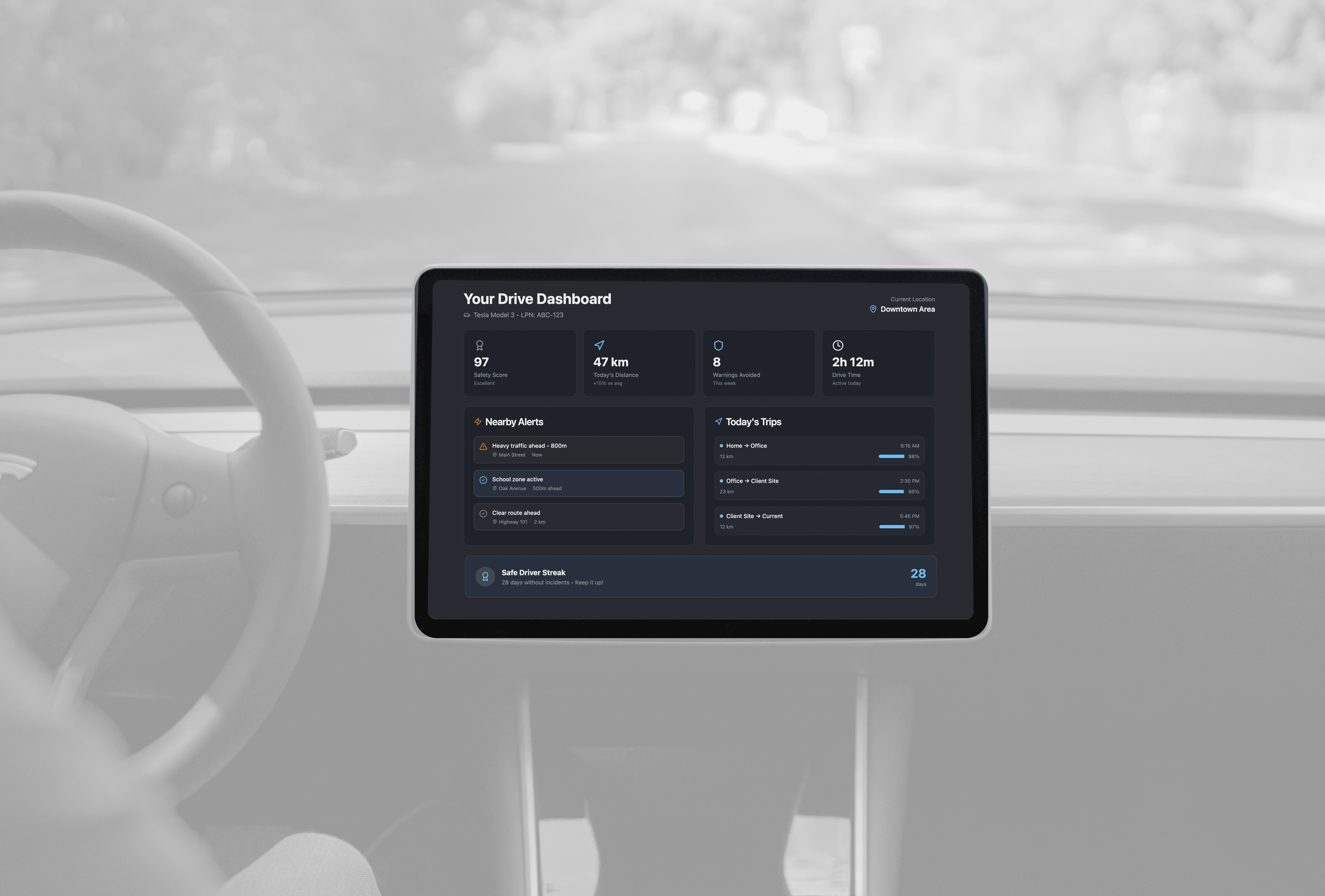
I led UX and strategy for a real-time vehicle safety network, translating federated learning and confidential computing into intuitive dashboards that showed how collision prevention works without raw data leaving the source.
Role UX Lead & UX Strategist
Format 1.5-day hackathon · November 2025
Team Data Scientist, DevOps Engineer, Senior Innovation Strategist, 2 Software Engineering Students
Prototype streetview-aware.lovable.app
What I owned
UX direction and product structure · driver and operator dashboards · warning states, map overlays and risk visualisation · 10-scene animated narrative · pitch structure and cross-functional alignment
01 · The challenge
Vehicles still miss cyclists and pedestrians hidden behind buses, vans and corners. Cities and mobility actors hold data that could help — but privacy regulation and fragmented systems make real-time sharing hard.
The design challenge: show how vehicles and cities could share safety insight without exposing raw data.
The strategic challenge: make a highly technical concept — federated learning, confidential computing, edge processing — feel clear, credible and commercially viable. In a day and a half.

02 · Approach
Align before designing. I facilitated fast alignment across data science, engineering, innovation strategy and design — users, value proposition, technical constraints, pitch strategy. With 1.5 days, deciding what not to prototype was the first design decision.
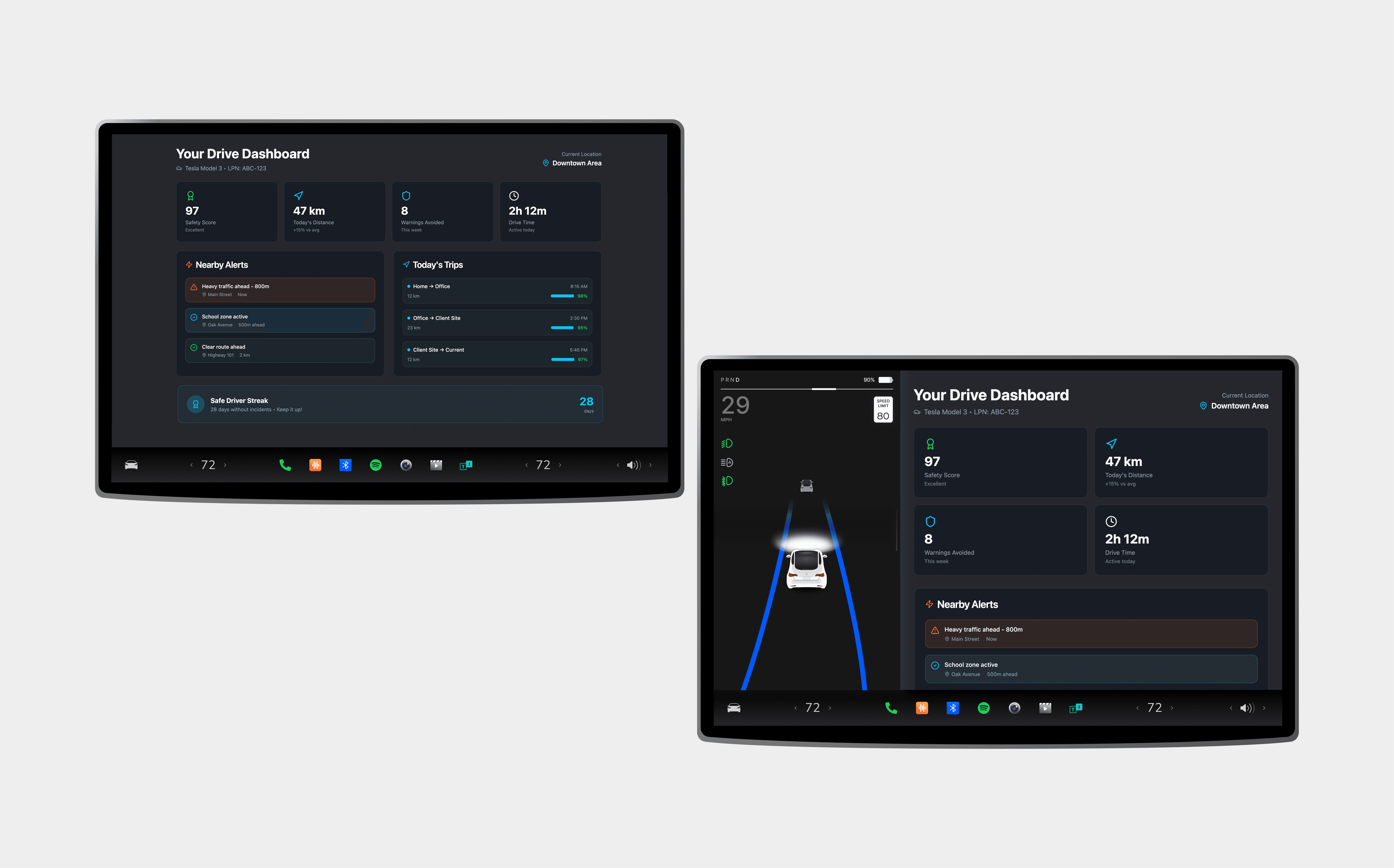
Driver dashboard. A glanceable in-vehicle interface: blind spot alerts, nearby hazards, risk scoring, and a clear representation of what the car could "see" beyond its own sensors.
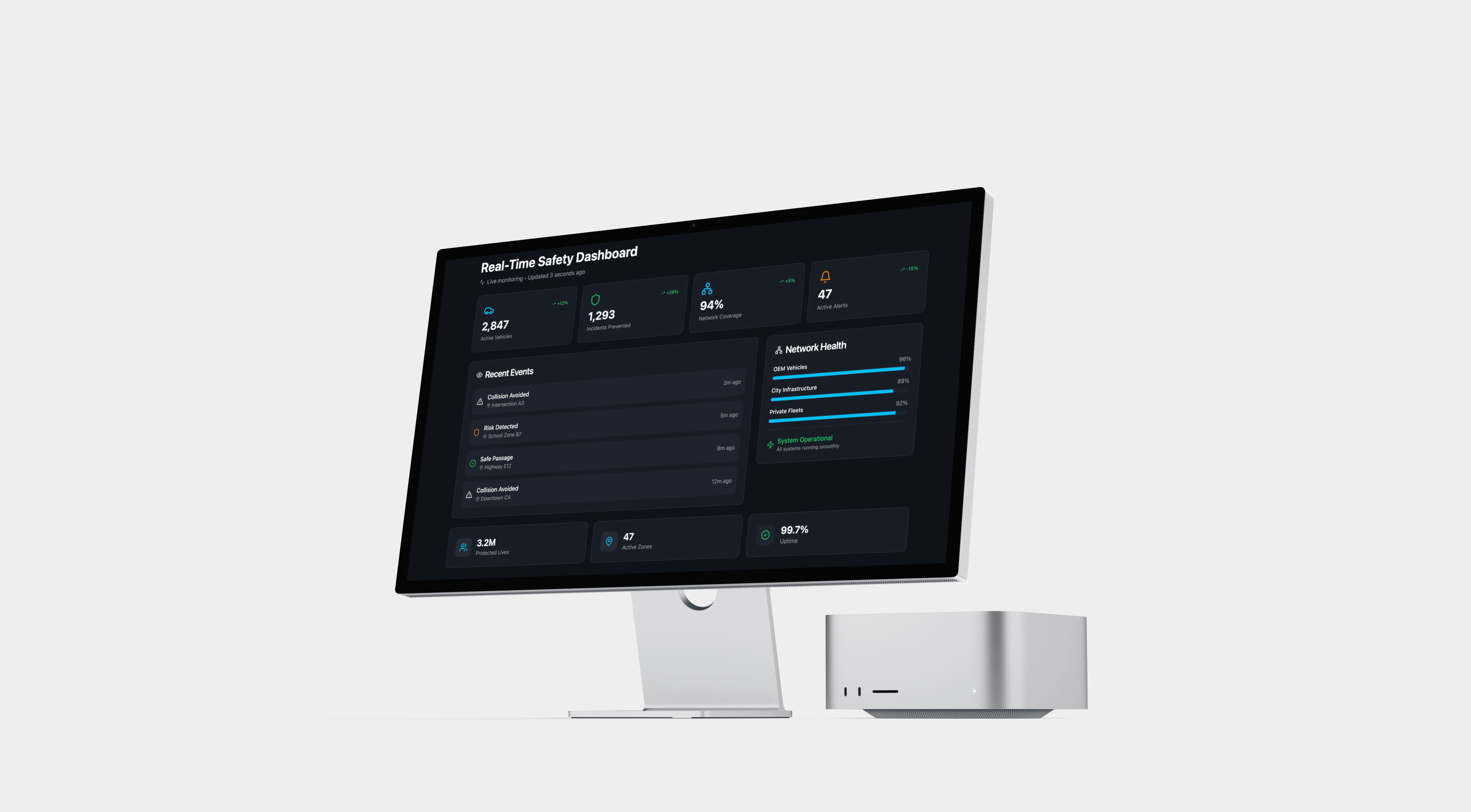
Operator dashboard. A city and fleet view: collision hotspots, near-miss patterns, multi-camera fusion, anonymised data flow, system status.
Animated product narrative. A 10-scene Lovable prototype walking through the problem, the privacy-preserving system logic, real-time prediction, stakeholder value and commercial potential. This was the piece that made federated computing legible to a non-technical room.
Across all three I built a consistent visual system — icons, alerts, state transitions, motion principles — so the concept read as a product rather than a diagram.

03 · Result
Complete, presentation-ready safety concept delivered in 1.5 days
Two dashboard directions covering both driver-facing and operator-facing needs
Animated narrative that made federated computing understandable to non-technical stakeholders
A pitch connecting user need, technical architecture, privacy, business value and societal impact
Engineers freed to focus on feasibility while I carried UX, storytelling and execution
Future potential: smart city infrastructure, autonomous vehicle fleets, fleet safety systems, privacy-preserving mobility intelligence.


Takeaways
Design is how invisible infrastructure becomes persuasive. Federated learning doesn't demo. A dashboard showing what the car can see beyond its own sensors does.
Under extreme time pressure, scoping is the leadership act. Choosing what to visualise, what to prototype and what to only explain mattered more than any individual screen.
Technical credibility and emotional clarity aren't a trade-off. The pitch needed both — the engineers had to recognise their system in it, and the room had to care.
Skills
Product strategy · UX/UI leadership · Dashboard design · Data visualisation · Rapid prototyping · Technical translation · System mapping · Interaction design · Motion design · Stakeholder communication · Pitch strategy · Cross-functional collaboration · Lovable · AI-assisted prototyping